
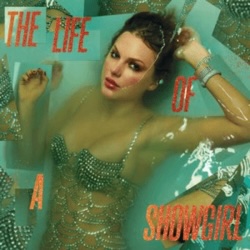
JL, a Longtime Loyal Follower of These Musings, asks the question1:
“I know Taylor Swift isn’t your fav but wondered if you’ve listened and had thoughts on her new album that’s all songs collaborating with Max Martin and Shellback. I’ve heard people say it’s very pop Sweden..which means little to me but made me think of asking you if it’s “pop Sweden” to you. 😆”
This is Part 2 of my response, edited for the blog.
As I said before, Max Martin is a genius who is both rooted in and transcends Swedish pop. But in his transcendence, he also still influences it.
My metaphor is Steph Curry. People were shooting three-pointers before Steph, and some built their reputations on that skill. Then Steph comes and takes that skill to an unprecedented level. And then everybody else starts doing what he’s doing, which changes the game without challenging Steph’s position as the best at that part of the game. Put Max Martin in the metaphor for Steph, and Swedish Pop in for three-point shooting.
For Max, how a song FEELS is the most crucial thing in a pop song. What the song says is secondary and will be sacrificed to maximize how the sound of the song makes you feel.
The singer Pink says, “[Max] makes a song feel good in people’s bodies.”
He creates intrigue from beginning to end, juxtaposing precision in rhythm and instrumentation with elements of surprise (tempo changes, odd, random sounds) and juxtaposing BIG, expansive choruses with strategic use of silence and space.
Intrigue often comes from the first thing you hear – some opening sound that immediately grabs your attention. That thing often gets re-inserted elsewhere in the song.
Or sometimes it’s meaningless to the rest of the song but attention-getting nonetheless – the opening drum roll in The Fate of Ophelia.
Intrigue also comes via SURPRISE – you didn’t see that coming! Max maintains interest by making melodies and choruses take unexpected twists and turns. By establishing a pattern and reintroducing that pattern in a different way, a typical Max production gives you feel-good bursts throughout the song. I call it “repeat but differently.” The first verse can sound one way, and the second verse another way. The first chorus sounds one way, and the second sounds another. Where you were expecting certain instrumentation, you get different instruments. Basically, if you expected something to happen, it doesn’t, and therefore, it re-stimulates your attention and interest.
And his signature: “Max, don’t bore us. Take us to the chorus.” The timing of the first chorus has varied across artists over the years, but it will almost always arrive within 45 seconds, give or take a few seconds. This can vary, but when it does, it’s because Max has other devices working. In The Weeknd’s 2019 hit Blinding Lights the chorus doesn’t arrive until 1:02. But after the song’s percussive opening, the first thing you hear is a synthesizer line that contains the seeds of that “late”-arriving chorus! Again, Max grabs and maintains interest by making melodies and choruses take unexpected twists and turns.
Max and others who have worked with him use the word “efficiency.” If the song is about feeling, you can’t make the listener wait for the payoff. But if Max makes you wait, the goal is the same: get there at the right time and in a big way.
Look for these thumbprints in Adam Lambert’s Grammy-nominated collaboration with Max Martin, preferably with headphones.
Opening acoustic guitar strum – very simple, stark, and bright.
1st Verse – simple drum program (computerized beats), voice, and repeats of the opening guitar line.
Chorus – 50 seconds – BIG DRUMS, BIG GUITARS (no more acoustic) and now it’s a rock song!
2nd verse – Adam is now dueting with himself, and the song stays a rock song; it didn’t revert to the simplicity of the first verse. It’s essentially a different song now.
Repeat the first chorus, EXCEPT towards the end, when Adam adds a couple of “whataya want from me’s” in a call-and-response form, drawn from gospel/r&b music. In my prior blog, I mentioned that Swedish pop creators sometimes borrow freely from different genres within the same song.
Now that the ballad has become a rock song, you would expect a guitar solo after the second chorus. But – SURPRISE! – the “solo” is an instrumental variation of the chorus, and it’s not by a guitar but by synthesized strings/keyboard with the guitars in the background.
Next, there’s a brief section that strategically employs silence and space to briefly create a new feeling. Max re-uses the acoustic guitar strum that opened the song and that leads to . .
THE BIG FINISH!!!!!
It’s the third/fourth chorus, but true to form, it’s not like the other two. In this case, Adam adds occasional vocal flourishes on top of the main vocal line. Again, this “repeat but differently” procedure maintains your interest without your being aware of what Max did.
And that’s just the outline of the song. The “body” – all the instrumentation – is dense and tight. Hundreds of things are working in relentless synchronicity lest you lose feeling and efficiency.
When you’re finished listening to that, listen to Taylor’s I Knew You Were Trouble.
Don’t look for the exact details from the pattern for Whataya Want From Me, but rather look for the simple beginning, the early chorus (a few seconds earlier than usual on this one), surprise elements of change, how the song builds in intensity, and the “repeat but differently” thing.
And the same for We Are Never Getting Back Together.
And then The Fate of Ophelia.
And by the way, any of these devices may not be evident at first, and that’s the point. He wants hits, which means we have to listen to his songs over and over without pinpointing why they’re so catchy.2 If every song followed a rote formula, we’d catch on and eventually get bored.
Extra credit: Listen to Adele Send My Love (To Your New Lover) with my Max-isms in mind. She was inspired to work with Max after hearing Taylor’s I Knew You Were Trouble.
P.S. How great is Max Martin? As a songwriter with 28 number one hits on the Billboard chart, Martin ranks second, behind only Paul McCartney (32) and surpassing John Lennon (26). Note that Lennon and McCartney share 18 of their respective #1s, while Martin’s 28 hits come from eleven different artists.
Max Martin also has 25 #1 hits as a producer for various artists on the Billboard Hot 100, which is more than any other producer in history. George Martin, The Beatles’ producer, has 19 #1s.
 Ray's Musings
Leave a comment